
Is Window Tint Actually Illegal in Nepal? Here's What the Law, Regulations and Inspection Manual Say





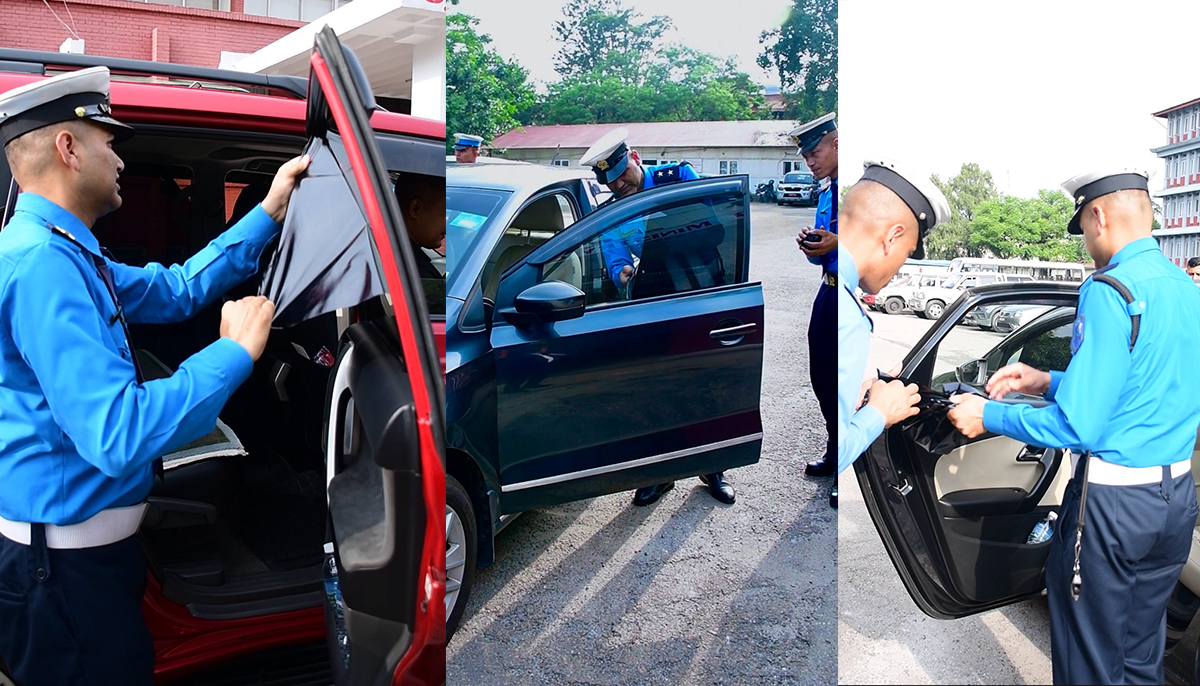
The recent enforcement drive against tinted windows has sparked widespread discussion among motorists across Nepal.
While many assume that any form of window tint is outright illegal, a closer examination of the country's laws and technical standards reveals that the issue is more complex than it first appears.

Following our previous report on the Kathmandu Valley Traffic Police's crackdown, Nepal Drives reviewed the relevant legislation, regulations and the Department of Transport Management's official vehicle inspection manual to better understand the legal framework governing tinted glass.
What Does the Law Actually Say?
Traffic Police have stated that enforcement is being carried out under Section 39 of the Vehicle and Transport Management Act, 2049, together with Rule 12 of the Vehicle and Transport Management Regulations, 2054.
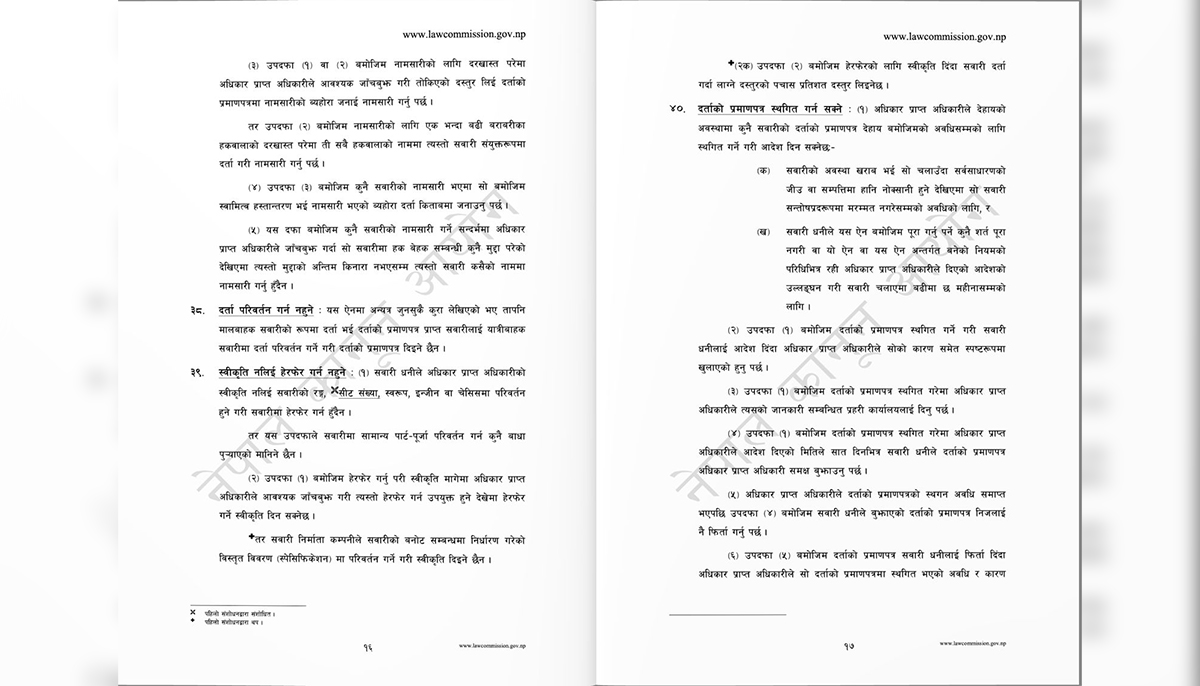
However, one interesting observation emerges when reading the legislation itself.
Section 39 does not explicitly prohibit window tint or tinted glass. Instead, it generally prohibits altering certain aspects of a vehicle without prior approval from the competent authority. These include changes to the vehicle's colour, seating capacity, structure, engine and chassis.
Current enforcement appears to interpret the installation of aftermarket window film as an alteration to the vehicle's structure, thereby requiring government approval before it can legally be used.
While that interpretation forms the basis of present-day enforcement, the Act itself does not specifically mention tinted windows, window film or visible light transmission (VLT).
The Inspection Manual Tells a Different Story
The picture becomes even more interesting when looking at the Department of Transport Management's Medium and Light Motor Vehicles Inspection Manual (2074/2018).
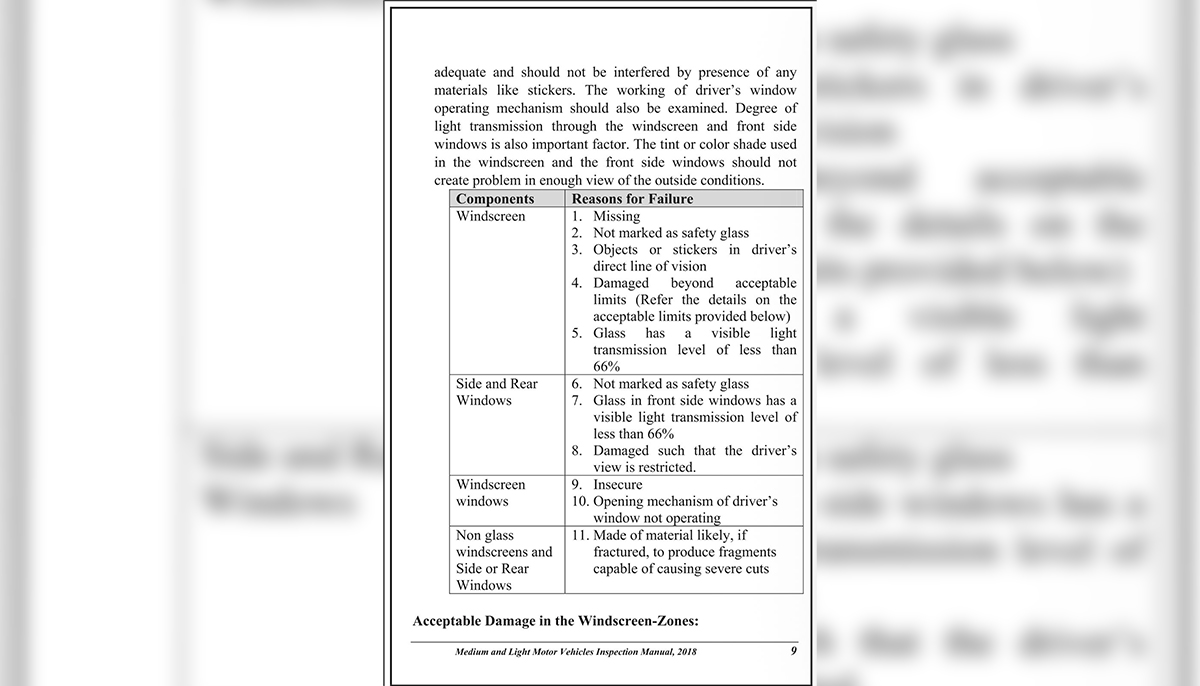
Unlike the Act, the inspection manual establishes measurable technical standards for vehicle inspections.
According to the manual, the windscreen and front side windows should:
• provide sufficient visibility for the driver; and
• maintain a minimum Visible Light Transmission (VLT) of 66 percent.
A vehicle fails inspection if either the driver's visibility is obstructed or the front glazing falls below this 66 percent threshold.
Notably, the inspection manual does not state that every vehicle fitted with tinted glass must automatically fail inspection. Instead, it assesses compliance based on visibility and light transmission.
Two Different Standards?
This is where confusion begins.
The current enforcement approach effectively treats aftermarket tint film as an unauthorised vehicle modification unless approved by the relevant authority.
Meanwhile, the official inspection manual evaluates vehicles using measurable technical criteria centred around visibility and light transmission.
In other words, one document focuses on whether a modification has been authorised, while another focuses on whether the vehicle remains safe to operate.
The two approaches are not necessarily contradictory, but they address different aspects of vehicle regulation and can understandably leave motorists uncertain about what is actually permitted.
Factory Privacy Glass vs Aftermarket Tint
Another issue frequently raised by vehicle owners concerns factory-fitted privacy glass.
Many modern SUVs, EVs and premium passenger vehicles arrive from the manufacturer with darker rear glass that is built into the glazing itself rather than applied as an aftermarket film.
Industry stakeholders have argued that factory privacy glass and aftermarket tint films should be treated differently, as they are fundamentally different products. This concern was also raised during recent discussions between the NADA Automobiles Association of Nepal and Kathmandu Valley Traffic Police.
At present, however, publicly available government guidance explaining how enforcement officers should distinguish between factory-fitted privacy glass and aftermarket films remains limited.
The Need for Greater Clarity
There is little disagreement that excessive window tint can affect visibility and may also create challenges for law enforcement.
However, as Nepal's vehicle fleet becomes increasingly modern, many observers believe clearer technical standards would benefit motorists, importers and enforcement agencies alike.
Several countries regulate vehicle glazing primarily through measurable VLT limits rather than relying solely on whether tint has been added after manufacture. Nepal's own inspection manual already incorporates a technical VLT standard for vehicle inspections, suggesting that such an approach is not entirely unfamiliar within the country's regulatory framework.
Until further clarification is issued, motorists should be aware that traffic police are continuing to enforce the current legal interpretation, under which unauthorised aftermarket window tint may result in enforcement action, even though the official inspection manual separately specifies visibility-based technical standards.